
Welcome to Sharing Islam

Share With Us

Recommended Books

Espositocover_2 Cover of The Beauty of Ramadan

(click on book cover)
 

Blog powered by TypePad

Conversation With Mark Siljander on what Christians and Muslims can learn from each other — if we try.

Deadly Misunderstanding by Mark Siljander Today, we're welcoming a Christian voice into SharingIslam — at the request of Muslim and Christian readers who feel that what Mark Siljander has to say is very important for both faith communities ...

GOOGLE Mark Siljander, the evangelical Christian writer and global activist — and you'll feel a jolt. Right near the top of the online "hit list" are disturbing news items like this one from the Los Angeles Times: "Mark Siljander vehemently denies the allegations in the indictment ..."
    What indictment?!
    This is a conservative, evangelical, Republican who formerly served in the U.S. Congress and now travels the world working on peaceful development projects. When he's not working on commercial projects (like a green, bio-fuels project in Kenya at the moment), then he's working on nonprofit projects in trying to build peaceful relations between Western (mostly Christian) and Eastern (mostly Muslim) governments.
    Not only that, but HarperOne has just published his book, "A Deadly Misunderstanding: A Congressman's Quest to Bridge the Muslim-Christian Divide" — a terrific book that Americans should be reading and discussing in small groups.
    Plus, the book carries endorsements from Ban Ki-moon, Secretary-General of the United Nations, former Secretary of State James Baker — and the hottest writer in emergent-Christian circles, Brian McLaren.

    So, what indictment?!
    Well, ReadTheSpirit has not fully investigated all of the federal charges leveled at Siljander one year ago, but we dug into them enough to see that they represent a swamp of complicated issues. As Siljander himself insists — the charges may simply vanish this year, although the online headlines from a year ago will live on forever like a dark stain in an otherwise spotless overcoat.
    The fact that major figures like the trio above still are backing Siljander speaks of his credibility. He was charged with obstruction of justice and money laundering and aiding terrorism in a complex case involving grant money that may have passed through his nonprofit group. These funds were related to the controversial Islamic Relief Agency — although Siljander is not a part of that group. This may have been a well-intentioned donation of funds that wound up mistakenly in the wrong hands. It may also turn out that the federal case against Siljander was politically motivated to embarrass him because his work in promoting friendship with Muslim groups is so controversial.
    There's a federal court date in November 2009 that may be the next step in the case, if it isn't dismissed or resolved before this autumn. Little has been reported about the charges in the past year — but the headlines about the indictment are everywhere online. That's how the online world "works" these days. So, today's Conversation had to begin on that note.

Mark Siljander A Deadly Misunderstanding HERE ARE HIGHLIGHTS OF OUR CONVERSATION WITH MARK SILJANDER:

    DAVID: We’ve got to start our interview today with a question about the indictment, because it pops up in any Google search of your name these days. You’re often meeting with people around the world. What do you tell people about this lingering issue?
    MARK: When this was presented to the news media a year ago, it hit with two days of international journalism in top headlines and there were all these wild accusations that were just absolutely mind boggling to me. Then, there hasn’t been anything new, really, in about a year.
    What I can say is that I travel a lot and I am working on a model of peacemaking that comes right out of the teachings of Jesus. I meet with world leaders who other people may not choose to meet with. I’m hopeful and I try to build trust in the work that I do. I’ve traveled to over 130 countries in 20-some years and I’ve found that the kind of work I am doing is not what our American approach to ambassadorship normally tries to do.
    I tell people that, when I travel, that I’m trying to show love between people like Jesus showed us. But, that idea is not even a part of normal ambassadorship. That’s not a part of political thinking. You talk to people in the secular, political world and you say that what motivates you is trying to show love to people, they say: What are you talking about?!
    People have been skeptical of my motives. In the Bush administration, there were people who claimed to be Christians, but the truth is that there were people in that administration who think that people like me are out of our minds.
    DAVID: It’s clear from reading the press coverage from a year ago that there were some political motives in bringing this case against you. I’m not trying to pass myself off as an expert on this indictment — and the charges are serious — but having been a journalist for many years, this story reads to me like a legal situation that may end up with the charges pretty much vanishing. That is, except for the headlines on Google. Those will dog you for years.
    MARK: It’s not over, but we’re hoping it will be over this year.

    DAVID: Thanks for talking about that. I’m glad we could give people a basic framework for understanding what they’ll find on the Internet involving your name. Now, aside from that legal issue, your personal story is absolutely amazing!
    You once described yourself — years ago as a rising young Republican Congressman — as “a poster boy for Jerry Falwell.” You’ve been described as even more conservative than the term “evangelical” suggests. You’ve been described as a “fundamentalist.” You’re famous for calling the Quran “the book of the devil.”
    And now — now you’re an eloquent “poster boy” for Christian-Muslim dialogue. You’ve trained yourself in a number of languages and you’ve studied the Quran. You’re now saying that Christians and Muslims should become friends and, together, they should isolate and help to end the threat of violent religious extremism.
    It’s an amazing story. Have I got it about right?
    MARK: You do. I was an arrogant young-punk politician.
    DAVID: That terrible thing you said about the Quran? That happened back in the mid 1980s, about 20 years ago, when you went to a prayer breakfast and someone read aloud from the Quran. Right after hearing that, you wrote an angry letter saying that awful thing about the Quran. So, what happened next?
    MARK: I was highly offended when I heard the Quran read and I sent off that letter to the head of the prayer breakfast. I was young and in Congress and I was thinking I was so great, so smart. But I found out that I was wrong about some things.

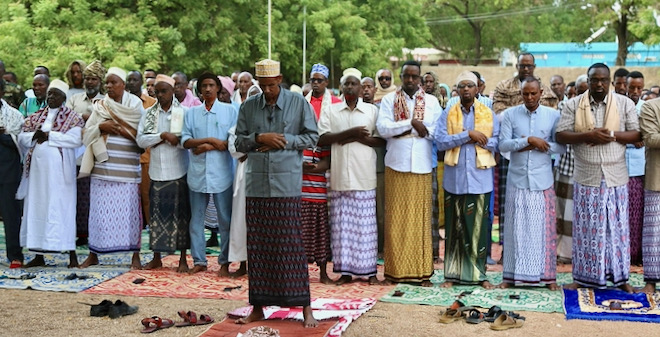
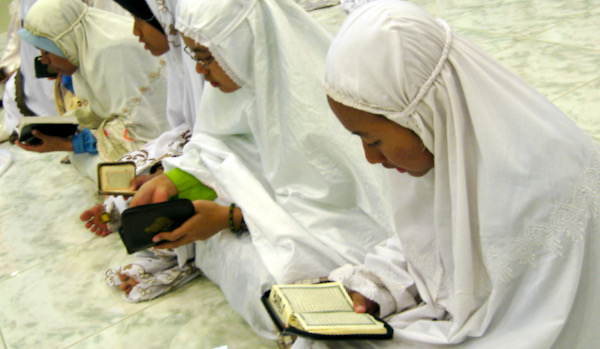
Reading the Quran in a mosque     DAVID: This led to a personal challenge that forced you to go back and study the Bible more carefully to see if Jesus really did instruct people to go out and convert people from other faiths, right?
    MARK: Yes, and I got terribly embarrassed. I read the New Testament over that year three times — three times — looking for where Jesus tells us to go out and convert people from other religions. I couldn’t find a single verse where Jesus told us to convert people from other religions. This was revolutionary in my mind. Jesus never mentioned the word “religion” once.
    What Jesus talked about was the need to help women, orphans, the needy. We also should  struggle internally in our lives to keep ourselves clean from the evils of this world.
    DAVID: And, now, if our readers understand Islam, they’ll be nodding their heads, because they’ll recognize that this is very close to things that Islam teaches. The kind of “internal struggle” you’re describing is really the meaning of “jihad” for most Muslims.
    MARK: Yes. And I kept reading the New Testament again and again. I was shocked that Jesus wasn’t talking about what I thought he was talking about. I had to call the guy I had written the letter to — and I had to tell him: “I’m stunned.”
    DAVID: Then, stunning moment number 2 came when you also began to read the Quran — and you discovered that the Quran says a whole lot about Jesus. In fact, the Quran talks about Jesus in ways that provide a big common ground for Christian-Muslim dialogue.
    MARK: Before I read the Quran, I was told that it talks about Jesus. Here’s how much I knew: I said, “Oh, that’s BS. The Quran doesn’t mention Jesus.”
    Then, I went and bought an edition of the Quran and I was blown away. It talks about Jesus more than 100 times.

Gatlinburg Tennessee     DAVID: In the book, you’ve got a terrific chapter about how you’ve now taken this message back to evangelical Christians. It’s late in the book and you describe addressing an audience of 150 pastors and missionaries “gathered for a conference in Gatlinburg, Tennessee, all waiting to hear what I had to say about Islam. It was no mystery to me what they were expecting me to say: Islam is of the devil, a pernicious corruption of faith that is bent on destruction of everything we believe in.”
    MARK: That’s right. And I said to them: “Do you mind if I open with some passages from the holy book?”
    And they called out, “Oh, yes!”
    I began saying, “Jesus is the Messiah.”
    They said: “Amen!”
    I said, “Jesus is sinless, supernaturally conceived through a virgin named Mary by the spirit of God. He is the word of God. He heals the sick and the blind. He can even raise the dead.”
    They got all wound up. They were shouting: “Hallelujah!”
    And I said: “Jesus was taken up by God and he’s coming back on Judgment Day.”
    They were going: “Amen! Amen!”
    Then, I said, “These are all words from the Quran.”
    DAVID: What happened?
    MARK: The place went from a holy ruckus to a silence so complete that you could have heard a pin drop.
    DAVID: What fascinates me about your work is that you remain a devout Christian. You attend a conservative, evangelical church in McLean, Virginia. And yet you argue passionately — and work in daring ways — to push Christians toward friendly, constructive dialogue rather than hateful confrontation.
    That’s amazing.

United Nations      MARK: I’m not an apologist for the Quran or for Islam. I’m an apologist for Jesus. I’m just trying to move people from this very negative point of view of Islam. It’s in the title of my book. The view of Islam by so many Christians is really just a big mishmash of “Deadly Misunderstanding.”
    The vast majority of Muslims — like the vast majority of Christians — want to lead peaceful lives. To force Muslims into a corner where there’s nowhere left to turn is a deadly mistake. That gives power to militants who are talking about killing people.
    I’m not telling people to go become Muslim. I’m a Christian. But there are more than a billion people in the world who we all ought to know a lot better. Christians ought to know Muslims. By learning about each other, we all can support moderates and endorse a peaceful interpretation of scriptures.
    DAVID: You’ve served several terms in Congress. You’ve served at the United Nations. You’ve traveled the world. And still — still you tell readers that there’s hope for peace and reconciliation. There are a lot of people who are sounding pretty hopeless right now about global conflict. You’re not only refreshing in your promotion of serious, peaceful dialogue between devout Christians and Muslims. You’re also refreshing in saying that we should be hopeful about world peace.
    MARK: In the middle of the last century, who ever thought the world could defeat the massive empire of communism? Communist leaders even had nuclear weapons! Who thought that could be overcome? But it was.
    I’m saying that the practical way to engender hope in the world is to support the vast majority of Muslims and work with them to undermine the small number of radicals out there. This isn’t a big Einstein theory. It’s just common sense.

Beirut Lebanon     DAVID: You write a lot about the importance of Indonesia and Lebanon. You’ve traveled extensively in both countries and you point out that Indonesia is a huge part of the Muslim world that Americans aren’t sufficiently addressing. In Lebanon, you write about the multiculturalism that’s an essential part of Lebanon’s history.
    I’m impressed. I agree with you on both of these points. Most Americans don’t know that there are more Muslims in Indonesia than in the entire Arab world. There have been problems with violence in Indonesia, but the potential for dialogue there is enormous. The same thing is true in Lebanon. It looks like a violent, troubling place to most Americans, but in Lebanon’s own history is the potential for multicultural dialogue and peaceful co-existence.
    MARK: Your questions are very astute. Lebanon to me is both a perfect example of how things could work and why they don’t work. The fabric of Lebanon is extremely cosmopolitan and diverse and the war in the early 1980s was just tragic. In Lebanon’s past, it has been the Paris of the Middle East.
    The trouble is that the hate between groups keeps resurfacing. Cycles of violence and fighting resurface. To recover the cosmopolitan nature of Lebanon, we all need to work on the reconciliation of the human heart.
    DAVID: And again you’re talking about concepts more pastoral than what we expect to hear from politicians.
    MARK: What we need is reconciliation between people. Jesus gives a model of reconciliation in the Bible and in the Quran. We need to find just a few leaders on each side who can form a little cell that can grow and organically influence others for reconciliation.

    DAVID: And you believe it can happen.
    MARK: I do. Who would have believed that William Wilberforce could end the slave trade in Britain? He was a well-to-do Parliament member but no one expected he could end slavery. People laughed at him.
    But he did it.
    Can we end this problem with violence in Islam? Yes, we can upend this situation. And we’re not going to do this by passing around copies of movies like “Obsession.”
    People have shown me that movie and they ask me: "Frightening, isn’t it?"
    I don’t disagree with that. These are frightening things. But then I ask the people who want to pass around “Obsession” — “So, what’s the end result of a movie like this? The end result is people are left fearful.” And these filmmakers want us to pass along more copies of this frightening movie?
    You’re left with nothing but fear. You’re left with people terrified. You’re left with people thinking: All they want to do is kill us!
    To that, I say: No.
    I say: We have to work on reconciliation.
    Can we make this change? We can. I know we can. If someone had told Americans in 1960 that we’d elect a black president in the United States, they’d have thought you were mentally ill. But change has come.
    Why do we keep teaching the politics of fear? We need to become prayer partners. We need to start studying scriptures together. That’s where our hope lies.

CARE TO READ MORE?

    Visit Mark Siljander's Web site that showcases his new book, "A Deadly Misunderstanding." It's a well-designed site with lots of endorsement notes, an excerpt of the book, a video you can watch and more.
    His for-profit consulting firm, Global Strategies Inc., is what underwrites Siljander's global work outside his nonprofit peacemaking projects. Siljander says he tries to accept mostly international projects that are "green" and that are good for developing countries. At ReadTheSpirit, we can't vouch for that and we have not independently investigated the whole array of clients he has served over the years with Global Strategies — but he has an array of strong supporters who do vouch for his work.
    You also can visit his Wikipedia page. This is a pretty good overview of his career, although we spotted a couple of small factual flaws in the Wiki article.
    Or, read about Mark's home church, the McLean Bible Church.

PLEASE, tell us what you think.
    Not only do we welcome your notes, ideas, suggestions and personal reflections—but our readers enjoy them as well. You can do this anytime by clicking on the "Comment" links at the end of each story. You also can Email ReadTheSpirit Editor David Crumm. We're also reachable on Facebook, Digg, Amazon, GoodReads and some of the other social-networking sites as well, if you're part of those groups.

    This also is a good time to sign up for our Monday-morning ReadTheSpirit Planner by Emailit's free and you can cancel it any time you'd like to do so. The Planner goes out each week to readers who want more of an "inside track" on what we're seeing on the horizon, plus it's got a popular "holidays" section.
    (Originally published at http://www.ReadTheSpirit.com/)

December 09, 2008

A Letter from Hajj: One Pilgrim's Story of a Journey for Millions

The Hajj in Mecca
Millions of our Muslim neighbors make the pilgrimage to Mecca. Unfortunately, because of the implosion of American news media and the dwindling numbers of religion writers, there is very little coverage of the Hajj in U.S. news media.
    Our pioneering approach at ReadTheSpirit is to blend traditional journalistic approaches in writing about religion and spiritual media — with an international network of readers and writers who lend their own voices and stories to enrich all of us.
    So, we can’t think of a better way to give you a taste of the Hajj than to share this “Letter from the Hajj,” written by Victor Begg, who is based in Michigan but is known nationally in interfaith networks as a Muslim peace activist.
    This isn’t a text-book entry. It’s one pilgrim’s journey among millions. He originally wrote this account for friends and the letter took on a life of its own. It has been the basis for sermons delivered by clergy who received the letter, including one rabbi. Overall, it’s the kind of personal approach we love to take toward important spiritual milestones like the Hajj.
    One note: Muslims honor the names of prophets by adding a reverent phrase, “Peace be upon him.” Often, this is shortened to (pbuh) after the names in print.
    So, here is …

A LETTER FROM THE HAJJ
By Victor Begg

2 The Hajj pilgrimage to Mecca Hajj is one of the 5 pillars of Islam, required to be performed once in a lifetime by able-bodied Muslims who are also financially able. Preparation for Hajj includes asking for forgiveness from friends, relatives and acquaintances for any unresolved offenses we may have caused. Muslims often bid farewell by asking for everyone's good will and taking care of their obligations before they leave for Hajj.
    One of the important aspects of the pilgrimage is making seven circles around the house of worship (Kaba) rebuilt by Prophet Abraham (pbuh). It is said that Kaba originally was built by Adam — the common ancestor of all. It is also said: Angels worship God by circling His throne. Thus the circling of Kaba, which we call tawaf, represents the “primordial form of worship,” even before we were created — like the electrons revolving in an atom or the planets revolving around the sun.
    Kaba has a black stone encased in a white silver case as one of the corner stones, at the point we initiate circumventing the Kaba. It is said that Angel Gabriel brought this stone from heaven when Prophet Abraham (pbuh) started to build this House of Worship of One God.
    During Hajj, men are mandated to dress in two pieces of un-sewn white cloth, one around their waist and one over their upper body, called “ahram” (similar to what Muslims are buried in upon their passing from this world). Dressed alike, divisions among people disappear as all pilgrims recite the same words in one language. We are praying together in Arabic. In English, it means: “I am here O Lord, the One and Only, Glory to You..."
    Malcolm X's views on race were transformed upon witnessing the sea of humanity echoing the same words, clothed alike. These are the words on our lips from the time we put on the ahram, as we must do that when we get within 40 miles of Mecca (which could mean that we take on the state of ahram often in the plane before it lands).

Here is a Sufi perspective on circling of the Kaba:

Holy Shrine
Outside of time
Dressed in black
Mortal beings
Heartfelt pleadings
Dressed in white
Gold gilded door
White marble floor
Heaven's own white/black stone
White shrouds abound
Circling round
Chanting prayers
Heavenly dance
Prayers enhanced
Rising up
Focused glance
Prayerful trance
Singing praise
Cries out loud
From the shrouds
Seeking grace
Beloved Lord
You've seen and heard
All that we hide
Accept our plea
Set the guilty free
Saved from the fire
Attachment lost
Illusions crossed
Subhan Allah (All glory to God)
All praises to Him
Without kin
Alone and One
Ya Rahman Ya Rahim
Ya Rahman Ya Rahim
Ih-dinus-sirat-ul-mustaqeem
(O Most Merciful One
O Most Compassionate One
Show us the straight path
)

3 Muslims on pilgimage visit the well     After the tawaf, we drink from the well of zam zam that was created instantly by the will of God, according to our teachings, by Archangel Gabriel, to quench the thirst of Abraham's first born, left in the desert by father Abraham with his mother, Hagar. Water provided sustenance for baby Ishmael in answer to Hagar's prayers. I saw millions of pilgrims drink from the well and wash their faces, hands and feet in ablution. I was amazed how this water flows freely.
    We then pray at the spot where footsteps of Abraham (pbuh) are preserved. Next, we retrace the steps of Hagar running between the two hills called Safa and Marwa, looking for water or some caravan to help her newborn baby, Ishmael.

    In the next few days, there are other rites we must perform. Millions of people move after the morning prayers on the 8th day of the lunar month Zul-Hijjah towards the plains of Arafa and spend the night in the tent city of Mina along the way, just as the Prophet (pbuh) did more than 1,400 years ago. Next day, in Arafa, we gather where the Prophet (pbuh) gave his final sermon from a hill top. Muslims believe that the gathering in Arafa, clothed in white shrouds (no restriction for women but most cover themselves in white or plain color), represents the assembly of the resurrected humanity on the Day of Judgment. We pray more for forgiveness and for God's blessings.

4 Muslim pilgrims move into tent city      I prayed to God to grant me forgiveness and for my family, friends, and our communities and for peace in the world.
    Then the millions move again from the plains of Arafa to an area called Muzdalfa for night prayers where Prophet Muhammad (pbuh) spent the night. We pick up pebbles from the desert to demolish the Satan who tried to mislead Ishmael (pbuh) and Abraham (pbuh) on three different occasions. So, the next day, armed with those pebbles, we return to Mina to perform the rites (you know all about the throwing of these pebbles, thanks to CNN) and we live in the tent city spending the next 2 nights — praying and meditating and discarding the evil (Satan).

    Next, we return to Mecca to do our farewell tawaf. Men will shave their heads. Yes, including me as we are supposed to be newly born free of all sins upon proper completion of the pilgrimage. At the end of the pilgrimage, we sacrifice a lamb in commemoration of the sacrifice made by our great-grandpa Abraham (pbuh), in quest for submitting unconditionally to God's will.
    Prophet Abraham (pbuh) also prayed to God to bless this area with a city and the fruits to eat. We witnessed the bustling humanity, abundance of the fruits and goods from all over the world in the city of Mecca. God answered his prayers and continues to bless the desert city to this day. We pray, we meditate, we shop, we taste the international cuisine, we catch a few holy germs (I was still coughing upon arriving back at my home airport) but overall it is a great soul-satisfying experience. My wife absolutely lost herself in it.
    We had a large American contingent plus Canadian, European, Asian and African brothers and sisters who traveled with us. During Hajj, millions of people move from site to site over a period of days, which also makes one a very patient person.

    In spite of occasional mishaps, during this enormous gathering of pilgrims, Hajj is God's miracle in itself.

PLEASE, Tell Us What You Think.
    Not only do we welcome your notes, ideas, suggestions and personal reflections—but our readers enjoy them as well. You can do this anytime by clicking on the "Comment" links at the end of each story. You also can Email ReadTheSpirit Editor David Crumm. We're also reachable on Facebook, Digg, Amazon, GoodReads and some of the other social-networking sites as well, if you're part of those groups.
    (Originally published at http://www.ReadTheSpirit.com/)

November 20, 2008

A Story about an Ordinary Man who is an Extraordinary Neighbor

 Jack Seman Whatever your religious path may be, the story of Jack Seman will inspire you. He's the kind of neighbor we all wish we could meet.
    More importantly, he's the kind of neighbor we each can become. We may not have the time and resources to accomplish as much as Jack, but his tireless spirit of compassion and joy is the thing to emulate.
    What's more, Jack makes these spiritual connections with people—and with the natural world as well.

    We want to thank the journalist Raad Alawan, whose many professional accomplishments include video production and magazine writing and editing as well. You can read more about Raad by clicking on the link to "The Interfaith Story ..." (at right) or by visiting his magazine via the link (at right) to "Your Community Voice."

    You should see a video screen, below. Click to start the video and you'll meet Raad—who will tell you the story of Jack Seman, a story that just may move you to help a neighbor yourself today.

October 02, 2008

Roze Kadri: Reflecting on moving from Ramadan ... into the rest of the year ...

Eid_mubarak What a wonderful celebration! We want to thank the dozens of Muslim men, women and young people who shared their stories during this month of fasting and reflection!
    We've heard from readers around the world who have enjoyed "reading along with our neighbors" day by day — and that's why this project is so important! As we learn more about our neighbors' daily lives, whatever our faith may be, we discover that we share a lot of spiritual values.
    We're going to wrap up this Ramadan series with one more personal story today.
    BUT, we plan to keep this Web site open. The inspirational stories will remain here if you care to come back and reread them. Soon, we plan to rename this Web site SharingIslam.info and we will continue to welcome stories about Muslims, talking about our daily spiritual challenges and joys.

Roze_kadri_and_her_familyToday, we're sharing a final Ramadan reflection from Roze Kadri, a medical research coordinator in a division of the Wayne State University School of Medicine. Like so many American Muslim men and women, she balances a challenging professional life with time for her family and her community. (That's Roze with her family in the photo at right.) Here is her reflection on the conclusion of Ramadan ...

The Quran says: “Ramadan is the (month) in which was sent down the Quran, as a guide to mankind, also clear (signs) for guidance and judgment.”

    This month is indeed blessed for this reason and because the devil is constrained during this time, improving our ability to perform good deeds and refrain from misdeeds. It is said in religious circles that everything we do, every good act we commit, benefits us. Praying, alms-giving, even smiling to another person or educating ourselves, etc. — all positively benefit our soul from God. The one thing that we do just to honor God for being God is to fast during Ramadan.
    Every year, Ramadan seems to feel a little different. Maybe it’s because the fasting time is dictated by the lunar cycle and it varies; and so, too, do our activities and schedules from season to season. The name "Ramadan" refers to the 9th month of the Islamic lunar calendar, which happened to fall exactly on the 9th month of the American Georgian solar calendar, September, this year. That is rare! That celestial phenomenon won’t happen again for more than three decades.
    I am pleased this year that I have tried in earnest to fulfill my religious duty. It has not been challenging. But now that fasting is over, I feel more of a sense of loss than relief.

    Here's what I will miss:
    I will miss waking my children up for a pre-dawn meal when they are all still sleepy and mellow.
    In the months to come, I will miss most of the members of my family breaking our fasts together around the dinner table instead of catching a bite while on the run, in the car, at different times, and with other people.
    I will miss trying to make a fulfilling meal every meal.
    I will miss baking sweets.
    I will miss feeling like I have pleased God by fasting and supporting my family’s efforts to do so.
    I will miss feeling good about whatever donations I have given to charity knowing that the blessings of these gifts are increased during Ramadan).
    I will miss the increased congregation with all of my friends gathering to break fast together.
    And most of all, I will miss the constant reminders of an Almighty’s presence.

PLEASE, share your thoughts—and your stories.
    We have convenient links on this page—above at right to share your Comments or to share this story with a friend—and a link at left to "Share Your Story" with us.

October 01, 2008

Najwa Hadous: "Eid is the longest day ... but also the most joyous ..."

Eid_greetings_from_us_postal_servic GREETINGS
TO ALL WHO ARE
CELEBRATING
THE EID AL-FITR!

   This week, millions of Muslims around the world are celebrating the Eid al-Fitr, the celebration that ends the month-long fast of Ramadan. Eid observances vary among individuals and communities, as we explained yesterday.
    Whenever your fast ends, we want to wish you: "Eid Mubarak!"
    If you have Muslim friends, neighbors or co-workers, the holiday greeting is pronounced: "Eed Moo-BAR-ack!"
    MEANWHILE, we're going to continue to share with you some of the inspiring personal stories we've received ...

When American Muslims celebrate at the end of Ramadan, they observe the same religious and cultural traditions familiar to other faiths: prayers, family reunions, feasts — and a last-minute shopping rush. For Najwa Hadous, mother of four, that means toiling around town shopping for gifts and in the kitchen preparing for one of the biggest days on the Islamic calendar. Here’s her story, in her own words.

    To me, Ramadan is a cleansing approach for body and soul. The personal benefits of this month out-weigh the feelings of hunger and fatigue by the end of each day, and the benefits I gain after strengthen my relationships and make me a better person. It helps me re-develop my attitude and revitalize my spirit; it forces me to pay attention and be in control again as God had intended it to be by distancing ourselves from undesired temptations. Ramadan helps me restore my faith in humanity again. That’s what I await each year, experience and look forward to during this holy month.
    As many others, I’m a married woman and my husband I have four grown kids (3 boys and a girl) — and family responsibilities that go beyond my immediate household and a demanding full-time job.
    My day during Ramadan begins at 4:50 in the morning and ends around midnight. I’m smiling as I say this, but: Talk about exhaustion! Let me tell you, after we break fast and clean up, I’m so tired I couldn’t move a muscle, by this time my coffee is ready and waiting for me. I let my body rest while I’m enjoying a cup of coffee. I finish my prayers after, then I’m ready to go at it again! How? It’s all in the manner we take things, and my trust in God.
    One week before the holiday, I begin to get my home in order, bring out special dishes, trays for sweets, table cloths, glasses and coffee cups. Then, I begin to put a list together to buy gifts, toys, chocolates, and tradition and non-traditional Arabic sweets.
    Two days before the (Eid) holiday, I shop for food, special drinks (fresh fruit juices) and coffee.
    One day before the Eid, I begin to organize a special meal for the holiday that consists of appetizers, salad, but the main dish is always leg of lamb with rice and nuts, and Mulukhieh (a Lebanese spinach-like plant).
    On the day of the holiday, I get up early with my kids; we wear new cloth and proceed to the mosque. Once there we pay “Futrah” and Salat El-Eid then I get together with family, friends and acquaintances to congratulate each other for this blessed day. Then I gather with my brothers and sisters and their families to have breakfast and coffee together and exchange gifts. Next we visit other family members starting with the elderly and folks who had recently lost loved ones.
    The day of the Eid is the longest day for me, but it’s the most joyous because I feel special, surrounded with love and bliss.
    “Kul Aam wa Antum be-Kheir!” (It translates to “May the return of this day comes again to all of you with blessing!”

    PLEASE, share your thoughts—and your stories.
    We have convenient links on this page—above at right to share your Comments or to share this story with a friend—and a link at left to "Share Your Story" with us.

September 30, 2008

Latifeh Sabbagh: "We need a spiritual detox ..."

Eid_mubarak_2 FIRST, GREETINGS
TO ALL WHO ARE
CELEBRATING
THE EID AL-FITR!

    Today, millions of Muslims around the world are celebrating the Eid al-Fitr, the huge celebration that ends the month-long fast of Ramadan. But, not everyone will celebrate today. Millions more will celebrate tomorrow. Some may even wait another day.
    Here's why: Unlike hierarchical religious groups like the Catholic church in which worldwide leaders formally set religious observances — Islam emphasizes the responsibility of each Muslim to follow the faith's traditions. Some Muslims do look to particular scholars or imams for advice on beginning and ending the fast. Some Muslim communities consult scientists on the lunar calendar. Others prefer to sight the moon themselves. This means that American Muslim communities, made up of Muslims from many different cultures, observe the Eid for at least a couple of days.
    Whether your fast ends today — or later this week — we want to wish you: "Eid Mubarak!"
    If you have Muslim friends, neighbors or co-workers, the holiday greeting is pronounced: "Eed Moo-BAR-ack!" Also, most online greeting-card sites now have free E-cards you can send. Just visit your favorite E-card site and search for "Eid Mubarak."
    MEANWHILE, we're going to continue to share with you some of the inspiring personal stories we've received ...

Latifeh_sabbagh_at_islamic_center_o Latifeh Sabbagh, a middle-school social worker and a clinical therapist, talks about what this month-long fast represents for millions of Muslims. In an important sense, it's a "spiritual detox," she says — but as you read her reflections you'll find her echoing thoughts that many Christians voice as the Christmas season draws to a close. Here are Latifeh's words ...

    Every year we need a spiritual detox — a time to step back and welcome this new spirit of Ramadan.
    Not only is Ramadan a good detox for the body, but it’s also a cleansing for your spirit and soul. We move away from this materialistic world. We reflect on individuals who are less fortunate. We spend so much time with family, thinking about giving, thinking about God.
    As human beings, we need reminders like this of how life is supposed to be — of what our spirits really need. We start to take things for granted and we don’t appreciate what we are blessed with.
    Then, each year, we go through this experience of Ramadan where we’re around family so much, we’re thinking so much more about God, we’re with friends. If you come to our Islamic center here, you can hardly find a seat, because so many people are here. You can’t keep up with the invitations from friends and family to share meals — people you don’t see much throughout the rest of the year, but they’re all around you in Ramadan.
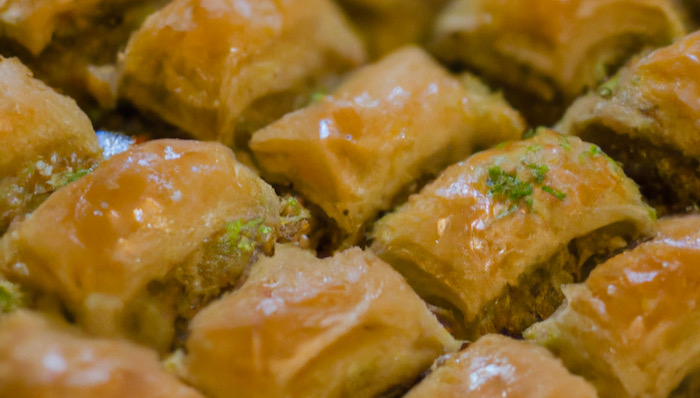
    You go to a pastry shop and you can wait for two hours because so many people are enjoying Ramadan and preparing meals.
    There’s so much love in the air, so much caring and giving. As we reach the end of Ramadan, people say: “Why can’t every day of the year be like Ramadan?”

PLEASE, share your thoughts—and your stories.
    We have convenient links on this page—above at right to share your Comments or to share this story with a friend—and a link at left to "Share Your Story" with us.

September 29, 2008

Ahmad Chaar: "Putting ourselves in others' shoes ..."

Ahmad_chaar_at_islamic_center_of_am Ahmad Chaar is a business analyst, one of many young Muslim professionals whose worldviews are shaped by Islam toward a compassionate concern for the needy. He talks about Ramadan as a time of trying to appreciate the experiences of other people — and he points out that even his Christian friends sometimes forget the deep connections between these religious experiences. Here are Ahmad's words:

    Ramadan is a time of putting ourselves in each other’s shoes.
    If you’re Christian, you can put yourself in our shoes. I get questions about the fast from people who are Christians and I explain to them: You know, fasting isn’t new to Christians. It’s in your faith as well.
    Inwardly, during Ramadan, I’m increasing my closeness to the Lord throughout the month. But I’m also increasing my awareness of the needs of other people in the world.
    My Mom would say this to me when we break the fast at night: “Ahmad, be thankful for this meal, because you fasted all day — and then there was this meal for you. In so many places around the world, when the day is done and people are hungry, they have no meal. Their hunger and their thirst goes on.”
    One of the most important things that I get out of the fast is thankfulness to God. Most of the year, we forget how many blessings we receive each day. Most of the time in our lives, we tend to focus on luxury and pleasure in our lives, thinking about what we want to have. Then, in Ramadan we take some of our basic necessities away. We become hungry and thirsty to the point that our mouths are dry and we feel the effects. Now, luxury and pleasure take the back burner. We’re now thinking on a deeper level.
    Do you realize that, if you have a cup of clean water to drink, you’re doing better than half of the people in the world. There’s a 50-50 chance in the world that we will be born into the half of the world with clean water to drink. I’m nowhere near as aware of that as I should be, but Ramadan makes me think about this again.
    And we’ve got so many more resources than just clean water! We should be thankful for what we have in life, but we also should remember all the needy people who do not have such blessings. We need to share with them.

PLEASE, share your thoughts—and your stories.
    We have convenient links on this page—above at right to share your Comments or to share this story with a friend—and a link at left to "Share Your Story" with us.

September 28, 2008

Hassan Alaouie: "Look upon yourself more as a server ..."

Hassan_alaouie_at_islamic_center_of Hassan Alaouie, 27, is a software engineer, a father of two and an active member at his Muslim center. He talks about how the weeks of fasting work on one's heart to discover that faith isn't merely about how much we may receive as individuals. This is a powerful theme that members of other faiths can appreciate.

A lot of people think that Ramadan is about starvation. You know, a lot of people may think that we're just starving ourselves for a noble cause and that's all it is. But there's so much more to Ramadan. It's a time of bonding, of thinking, of spending time together, of learning what we should be doing in the world.
    There's fun. One thing we do is enjoy more TV together. There are a lot of religious programs on TV at this time of year if you have a satellite dish. I remember there's this one song that would come on every year. We loved that song: "99 Names of Allah." Now, I've moved into my own house and I don't have a dish, but I'll tell you I was thinking about getting a dish just to hear that old song again.
    And, we help a lot more in the family. We can't eat. We do get to feeling tired during the day. So, it's a good time to spend with the family just helping each other. Like, if we're at my Mom's house, we'll help her set the table, do chores for her, help with the cooking. Of course, Mom always yells at us because we're not cutting up the vegetables fine enough. (He laughs fondly.) But it's true that we spend a lot more time around the home helping each other.
    Ramadan tenders the heart.
    It makes you evaluate things. You're not just doing things randomly as you hurry through the day. You're thinking about each thing. Will I put this spoon of food into my mouth? What am I really trying to say as I am writing this note during my work day? What am I doing as I'm talking on the phone to this person? I'm thinking more about each moment in my day.
    You start to think about more than your physical actions. You start thinking about your spiritual choices: Doing what's good and avoiding what's evil. You look more deeply into what we're being taught about the world.
    Last year, I had one child. This year, I have two children. I'm a father with a 2-year-old girl, Hala, and an 8-month-old boy, Haidar. I'm also getting more involved in volunteering activities at the mosque.
    As you think about this during the fast, you begin to look upon yourself more as a server rather than just as someone who is only thinking about being a recipient of God's blessings.
    In this way, I think we do make the world better.

PLEASE, share your thoughts—and your stories.
    We have convenient links on this page—above at right to share your Comments or to share this story with a friend—and a link at left to "Share Your Story" with us.

September 27, 2008

Hassan Faraj: "They fast and they know how we feel ..."

Hassan_after_a_football_workout Imagine the strength and physical agility required to bring down opponents for your football team. Now think about trying to do it without eating or drinking all day. That's Hassan Faraj’s challenge playing for the Dearborn Lions during Ramadan. Journalist Raad Alawan caught up with Hassan at Hemlock Park in Dearborn during an early September practice when the temperature peaked at 93 degrees.
    The following is what Hassan told him — a vivid glimpse of the spiritual determination required to get through a challenge like afternoon football practice:

It gets harder by the year because you’re getting older.
    It gets harder on your body. I’m sweating a lot; I lose my mind. I don’t pay attention that well. It feels weird.
    I always want to reach for water, to at least rinse out my mouth. But I can’t because I fear God.
    Today, I got up at 4:30. I ate a little, drank a little, and then went back to sleep. I woke up at seven and went to school, and then here to practice.
    No water, no food. I’m tired and drowsy.
    The coaches don’t really give us breaks. But they’re doing the same thing we do. They fast and know how we feel.
    The best part of the day is when I eat. Usually, I eat salad, chicken, and drink a lot of water. I eat again, and then go back to sleep.

PLEASE, share your thoughts—and your stories.
    We have convenient links on this page—above at right to share your Comments or to share this story with a friend—and a link at left to "Share Your Story" with us.

September 26, 2008

Rose Alcodray-Khalifa: "It's all part of finding balance ..."

Rose_khalifa We want to thank readers for joining in this Ramadan series with your Comments and your stories. The following was sent to us mid-Ramadan about a family whose major challenges in this month of fasting wound up including ...
   Well, here's Rose's story just as it was sent to us by one of our regular readers:

When it rains, it pours.
   Rose Alcodray-Khalifa knows that better than anyone. This Dearborn Heights mother of two and Executive Director of Metro Health Services, Inc., hardly has a moment to spare when everything goes as planned. Ramadan’s fasting schedule can make juggling a family and career even more challenging. And then, this year, their roof went!
   And the three straight days of rain that swept through southeast Michigan only complicated matters further.
   “We’ve probably had iftar at home with the family only two or three times this Ramadan,” Rose admitted recently. But she probably wouldn’t have it any other way.
   “Ramadan is a time when you are continually aware of your faith,” she explained. “It’s a time when you feel very close to the ideals and traditions of Islam.”
   While many families find themselves gathered with extended family and friends each evening over a seemingly never-ending selection of favorite foods, Rose realizes that sometimes, that’s not always possible. And certainly not even needed.
   “Of course, we’ve been sharing iftars with friends and family all over town. And you realize that the important part is just being together. Even if it means take-out. It’s all part of finding that balance."
   And Rose is balancing a lot. Since coming to this country at the age of six from Lebanon, she has become an active community member with a large network of friends and professional associates. One of the pioneers of cross-cultural awareness in the health care profession, she is the founder and director of the National American Arab Nurses Association (NAANA) and is in the midst of final preparations for its Inaugural National Convention “Building Cultural Bridges in Healthcare: Strength in Diversity” October 9 & 10 at the Detroit Marriott at the Renaissance Center.
   And she's accomplishing all of this while making family and faith a priority. Rose and her husband, Reda Khalifa, MD, have two children, Ziad, 10, and Yasmen, 5.
   Like many families in Metro Detroit, they balance sports and homework, family vacations, professional obligations, and that all-important time with family and friends.
   Even during Ramadan.
   With a leaky roof.

PLEASE, share your thoughts—and your stories.
    We have convenient links on this page—above at right to share your Comments or to share this story with a friend—and a link at left to "Share Your Story" with us.

September 25, 2008

Danya Obeid: An 8-year-old perspective on the festivities of Ramadan

Danya_obeid_age_8 Children as young as 8-year-old Danya Obeid are not obligated to fast in Islam, but some Muslim children start fasting at an early age, especially if they are part of a large family and see older brothers and sisters fasting. Usually, as in the Obeid family, parents help youngsters decide when to try fasting and they watch them closely to make sure they’re healthy. Often, parents suggest weekends as good days to try this discipline.
    Here’s is Danya’s story in her own words:

Fasting is kind of hard, but this year I’m going to try to fast at least a couple of days. The hardest part of Ramadan for me will be at school, when I’m trying to fast and other people are eating. In my school they let us go to the library and read books if we’re fasting. But I know others are going to eat, and I’m not. That’s hard to think about.
    My Mom will help me decide which days I should fast. I will be choosing, but actually she will help me decide good days to do this.
    I really want to do it because I see my parents and my whole family doing this and I want to be part of it. I love Ramadan. We get to keep switching houses and having dinner in different places. We go see people and people come to see us. We decorate the house. We hang up lights. And we hang up these moons — these crescents.
    And we try to help people, too. Like older people? People who might need help? We’ll go help them and sometimes we’ll even take them food to eat, too.
    When we get together at night to eat, you know what I like? We have these meatballs shaped kind of like footballs. I really like those. But my favorite? I think that’s rice and yogurt. I love that.
    Ramadan is such a special time for all of us. It’s just very very fun.

PLEASE, share your thoughts—and your stories.
    We have convenient links on this page—above at right to share your Comments or to share this story with a friend—and a link at left to "Share Your Story" with us.

Share your thoughts

  • from Khadijeh

    Thank you Mr. Crumm for such an inspiring and eye opening project. Not only was I moved by many stories but as a Muslim I was also able to view Ramadhan from a different light! Your efforts within the Muslim Umma will never be forgotten. May Allah bless you and all of whom strive to work towards him.

  • from Ian c.

    very inspiring stories!
    Keep up the good work.

  • from Faten

    As an American born and raised Muslim, wearing the hijab (head cover), working in corporate America, I am proud to blend into the melting pot of our diverse metropolitan area, and appreciate all efforts, such as this project, to promote awareness of cultural and religious differences through education.

    Once again, Mr. David Crumm, you have proven to be an ambassador to our community. Thank you for your continued service to our community!

  • from Steve Spreitzer

    Statement on the Passing of W.Deen Mohammed

    The Michigan Roundtable for Diversity and Inclusion (formerly NCCJ and the greater Detroit Interfaith Roundtable) pauses to join those who mourn the death of Imam W. Deen Mohammed, one of the faith communities’ most revered leaders. As an organization rooted in Detroit since 1941, we saw the impact of his leadership away from a separatist movement with hatred toward the white race, to the pure treasures of Islam. Imam Mohammed also led those in his movement, at one time known as the Muslim Society of America, to the interfaith community, which reciprocally led the interfaith community to his practice of Islam. We remain grateful for the thousands of his followers, who worship across America and at two primary mosques in Detroit: Masjid Wali Muhammad and The Muslim Center. We join these friends and all who mourn his passing in prayers for W.Deen’s family.

    Steve Spreitzer, Director
    Interfaith Programs and Walk2gether Michigan
    Michigan Roundtable for Diversity and Inclusion

  • from ~55

    Thank you for taking the time today to mourn this man. He really did embody an American value of spreading peace and justice through collaboration and reconciliation. This man transformed so many people's lives and was a tremendous asset to the community of Muslims. For non-Muslims, you have to realize that this man broke down so many racial barriers using the pure form of Islam. God bless him and all those who strive in the path of god.

    Hassan A.

  • from Kathie Olive

    I have not yet had the time to read all the wonderful Muslim stories but so far am very impressed. The story tellers are so interesting. Can't wait to read more.

    Ramadan Mubarak.

  • from shamael

    peace be upon you all

    great website!
    this website reminds me of a book called one thousand roads to mecca about the various stories of people on hajj

    this is similar in that people are sharing their stories of ramadan and it can inspire and inform us.

    thank you for this great effort
    i will keep checking back to read more stories!

  • from Shakera Ali

    Ramadan Mubarak to everyone! MashAllah, These are all just such beautiful and inspiring stories. I love this site! Keep up this wonderful work! May Allah bless us all!

  • from Mina

    Ramadan Mubarak to all! This is a great website and please keep up the good work!

  • from Dawud Walid

    Thank you for this Sharing Ramadan project.

    So often, the deep spiritual message of Islam is not reported in the media in favor of sensational stories that have concretized the Muslims since 9/11.

    May G'd guide all towards peace and success in this life and the next life.

Published by David Crumm Media, LLC