

Search
Buy the Book

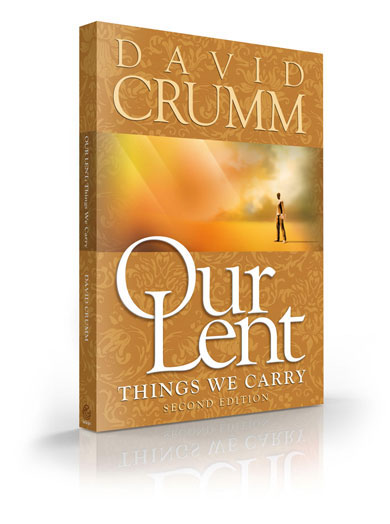
Enjoy the entire 40-day series in 245 pages. Plus, questions for personal reflection or discussion with friends.

Buy Now on Amazon (Print or Kindle)

More from ReadTheSpirit
Recent Posts for Our Lent
Saturday
Apr232011

40: Carrying stories to fill the whole world

2 billion Christians are traveling through Lent. We are providing this 40-day devotional adventure.
Give a friend this site’s simplest address http://www.OurLent.info

Here is the 40th of 40 stories for Lent:

What’s left? We’ve already enjoyed the most exquisite breakfast we’ve ever tasted and now the rising sun is at our backs as we return to the rest of our lives. Plus, it’s a holiday season! We’re just about to enjoy Easter dinner with our families and, then—then, we seriously need a good long nap. So, haven’t we covered everything already?

Not quite! There’s one last thing, hanging there like one of those antique ribbon bookmarks from the final page of the final gospel. That is, if we can remember what’s there in those final verses of John’s 21st chapter. Can you recall?

It’s books. Lots and lots of books. Don’t feel bad if this image didn’t immediately leap to the front of your mind. I haven’t met a single person in the many months it took to prepare this 40-day reflection who could recall immediately what was contained in the final verses of the final gospel. Remember that John’s gospel opens with: In the beginning was the Word, and the Word was with God, and the Word was God.

Then 21 chapters later, John closes with lines that include, in most translations, a very curious word: “If.” The final passage goes like this:

There are also many other things that Jesus did. If every one of them were written down, I suppose that even the world itself could not contain the books that would be written.

Translations vary, but the vast majority—including Eugene Peterson’s contemporary paraphrase, “The Message”—position that little word “if” right in the middle of John 21:25. How strange of John to finish his truly grand opera of a gospel in this odd, folksy voice of a storyteller. The style of this line feels more like J.R.R. Tolkien than New Testament, it seems. Remember that John is famous as the gospel writer who casts his scenes in such clear-cut, black-and-white terms: What about Judas? He was a demon! Who carried Jesus’ cross? Jesus carried it alone! And so on. Then, this oddly fuzzy little tag is left hanging off the end of his gospel—the very definition of a loose end.

Even though our “Things We Carry” narrative now has run into 40 chapters (not a nice, concise 21 like John’s gospel)—we know what John is talking about when he says that there’s never enough space to exhaust our story. There were a lot more things we could have written about in our meditations. We never explored things like the crown of thorns, for instance, or the nature of the rooms—from poor homes to imperial halls—through which Jesus passes. In the chapters we have shared with you, lots of details were left on the cutting-room floor, mostly for reasons of clarity and focus.

But, here’s a good example of a gem that was lost in the cutting—and that now sparkles back at us in the context of this final chapter—our final moments together in this Western Lenten season. Remember Chapter 22 about poetry and war’s rumors, featuring a story about Russian poet Joseph Brodsky? In that chapter, I described how the poet fled the Soviet Union and, in the mid 1970s, wound up at the University of Michigan in Ann Arbor, where he was supposed to teach poetry and immediately collided with his first class of university students. I say “collided” because Brodsky came to the seminar room with a far greater urgency about the nature of poetry than those shaggy-haired, up-scale American kids could begin to imagine. It’s true that, as the discussion unfolded in that first session with skeptics in Brodsky’s class, the kids had no initial sense of this poet who would later (in 1987) win the Nobel Prize for Literature. And, it’s true just as we reported in Chapter 22, that he finally did have to explain to these privileged university students that words weren’t merely intellectual toys.

His line, which his students would never forget, was: “If you are sent to a prison camp — the poetry you carry in your memory may be your entire world. So, we must choose well what world we will carry, no?” However, one detail we didn’t include, because Chapter 22 already was long enough, was that it was me—your guide through “Our Lent: Things We Carry”—who finally, after a long discussion with Brodsky, managed to recite the first Psalm of the evening: Psalm 90. That night, Psalm 90 was recited from the King James Version that includes the remarkable verses:

“We spend our years as a tale that is told. … So teach us to number our days, that we may apply our hearts unto wisdom.”

More than 30 years later, I still recall Brodsky, looking out a window, smoking quietly and nodding his head in the cadence of Psalm 90 as it resonated in the East Quad seminar room in Ann Arbor.

The idea that our spiritual calling involves sharing our stories with one another isn’t something that’s universally celebrated in Christian teaching. There have been long periods and powerful movements in Christian mysticism, over the centuries, that have argued for a spiritual goal of completely submerging our individual lives, hearts and spirits in the body of Christ—to such an extreme degree that we humbly deny any value as individuals. People talk about “crushing” or even “annihilating” ourselves as individual personalities in our pursuit of mystic union. Many writers and preachers have encouraged others to go and do likewise.

Such voices still echo. The French philosopher turned Christian mystic, Simone Weil, whose writings has seen something of a revival in the last couple of decades, wrote to a friend in 1942: “Nothing concerning me can have any kind of importance.” It’s part of a long passage in which she talks about the “valueless” nature of her individual life. However, if—and this is another enormous “if” like the one that closes John’s gospel—if Weil’s writings had not survived her death at age 34 of tuberculosis in 1943, the world would have been a poorer place. Her story, although often austere and extreme in its observations, is a powerful gospel in itself. The heroic example of her life, including her commitment to the French Resistance in World War II, and the challenging spiritual ideas she continues to spread throughout the world via her surviving writings, have prompted many people to suggest that she is an ideal saint for our times. Clearly, by the way she lived and wrote, she contradicted her own 1942 argument that her life was unimportant.

There’s proof of this spiritual principle in the works of writers as diverse as Charles Dickens and Jane Austen, Jack Kerouac and C.S. Lewis, Gabriel Garcia Marquez and Joan Didion. This is why J.R.R. Tolkien ends his Lord of the Rings trilogy with Frodo handing over to his friend Sam the priceless “big book with plain red leather covers” in which he and Bilbo already have filled nearly 80 chapters of the narrative. The story is precious, both because it was experienced at a dire cost in human life and because the narrative the book contains is timeless. Yet, Frodo does not fill the entire book. He intentionally leaves some blank pages at the end and, as he gives the book to his dear friend Sam, he says, “The last pages are for you.”

This is what John is saying in the closing of his gospel: Not that the story is finished—but that John is finished writing. He is saying, in effect: The ultimate thing in our human pilgrimage through God’s creation is the Story itself, the narrative we carry with us into the rest of the world that can connect all things—that can reconcile all things.

So it was shared 2,000 years ago in the last of the last of the gospels. The message is timeless and true: Our salvation is inextricably bound up with those things we choose to carry with us as we move through the world. And, the most important thing of all that we bear is the Story we have been given to share.

PLEASE HELP US WITH THIS ‘OUR LENT’ PILGRIMAGE

  • TELL A FRIEND: Pass along this simple address http://www.OurLent.info
  • PURCHASE THE BOOK: By ordering Our Lent: Things We Carry from Amazon, you help to support the ongoing work of ReadTheSpirit. Better yet—order two copies of the book and give one to a friend.
  • LET FACEBOOK FRIENDS KNOW ABOUT THIS: Click on the “Recommend” button below. It’s a great idea for spreading the news in a low-key way.

(Originally published at www.ReadTheSpirit.com, an online journal covering religion and cultural diversity.)

Friday
Apr222011

39: Exquisite taste around the fifth table!

2 billion Christians are traveling through Lent.
Give a friend this site’s simplest address http://www.OurLent.info

39th of 40 stories for Lent:

Do you enjoy the natural world? Have you ever spent the night outdoors and then shaken off the damp, the aches and the chills to approach a breakfast fire—or, at least, experienced this through novels by authors like Larry McMurtry or Ernest Hemingway? If you’re nodding your head to these questions, then you’ll agree that the most exquisite post-resurrection scene in the Bible is Jesus beckoning his old friends to breakfast on the shore at dawn.

Remember, this is the setting in which Peter recognizes Jesus from the boat, pulls a fisherman’s cloak around him and leaps into the water to reach Jesus first. Then, the others come to shore in their boat. At this point, here’s how John sets this fifth and final table in our Lenten pilgrimage:
As soon as they came to land, they saw a fire of coals there, and fish laid upon it, and bread. Jesus said to them: “Bring some of the fish that you have caught.”

Note that detail? Jesus already has the fire burning and he’s got a first helping of fish already sizzling there—but, he knows the taste of fresh-caught fish and he wants the men to bring some of that fresh-off-the-boat fish to share in the little circle he’s forming on the shore. John continues, explaining that Peter quickly began unloading fish. And: Jesus said to them, “Come and eat.”

Somewhat nervously, they came. And John says: Jesus came and took the bread and gave it to them, and he did likewise with the fish. Do you see the pattern? An invitation. A circle forms. There’s sustenance and there’s sharing.

More than a decade ago, South African Archbishop Desmond Tutu visited Detroit and the mayor’s office made a point of dispatching a plain-clothes detail of police to guard this world-famous civil rights hero. On Sunday morning, which oddly enough was the only down time left in the archbishop’s busy schedule, he invited me to interview him in his suite at the Renaissance Center hotel. We had met a few times over the years and he graciously made arrangements to spend an unhurried hour answering questions on this occasion.

However, after I trekked all the way into the downtown area, parked and made my way up to Tutu’s suite, the archbishop came to the door of his room with a worried frown. “There has been a change,” he said. “No interview now, I am sorry to tell you. I must use this hour for something more pressing.”

As I stood in the hallway, peering into his sitting room through the open door, several tall men in dark suits were visible as they sat rather awkwardly in easy chairs.

“Anything serious?” I asked, wanting an explanation but not wanting to be rude.

“Well, it was a discovery I made just a little while ago, or I would have telephoned you not to drive down here,” he said. “It seems that every single man in my police detail here either sings in a choir or is a deacon in his church—and I am the cause preventing these four fine men from serving in their parishes today. I cannot ignore this situation.”

“What do you plan to do?”

“Well, we have ordered some wine and a loaf of bread from room service and—of course—we must hold a liturgy here,” he said. “It will take me an hour, I should think.”

I stood silently for a long moment.

“Are you a man of faith?” he asked at length. “Would you like to join us for our little Eucharist?”

What do you think happened next? Who could refuse such an invitation? This is why one of the most memorable tables in my own life is an ordinary glass-topped, chrome-framed coffee table in a hotel sitting room in Detroit—because, around that table, Tutu invited five of us to join him as he prayed, taught, chanted a Psalm and finally consecrated bread and wine to share with us.

As I read that scene on the shoreline in the middle of John 21, I can feel the electricity those men felt that morning. Just as the five of us were in Tutu’s hotel suite as he celebrated the Eucharist just for us—Jesus’ followers on that shoreline 2,000 years ago surely were walking on pins and needles as they approached the breakfast fire. What was happening? Who was this? They were virtually certain it was Jesus, but none of them “dared to ask,” John writes. The connections in this spiritual journey often are extremely difficult to discern. But, Jesus kept pointing, time and time again, to this symbol—this thing—that is so central to the kingdom he sees emerging: a table. Remember the pattern: An invitation. A circle forms. There’s sustenance and there’s sharing.

Are you still a little nervous as we approach this next-to-the-last thing in our 40-part journey? Are you a little unclear, still, about how broadly we should think about this critically important Thing—this fifth table that Jesus is laying out for us?

In truth, it’s not nearly as hard as it may seem. In our adventure, we’ve already encountered the depths of Robert Frost’s poetic vision. If you missed that chapter, go back and check it out—because there’s some unforgettable imagery in that Chapter 22 on the poetry of war. These things all have a way of becoming inextricable tiles in the mosaic of our lives.

Forty years ago, the first Robert Frost poem that I ever memorized was so simple that it barely seemed like poetry at all. But the lines wear so well through the many ages in a person’s life that it’s the one poem that prefaces most collections of Frost’s poetry to this day. It’s a simple hymn about the gathering of two people in a rural setting—and it goes like this:

I’m going out to clean the pasture spring;
I’ll only stop to rake the leaves away
(And wait to watch the water clear, I may):
I shan’t be gone long.—You come too.
I’m going out to fetch the little calf
That’s standing by the mother. It’s so young,
It totters when she licks it with her tongue.
I shan’t be gone long.—You come too.

In much the same way, the invitation went out from the little fire along the shore of Galilee 2,000 years ago, the tangy smoke tickling our nostrils and the warmth soothing our damp and aching bones. Who could resist such an exquisitely delicious invitation?

Oddly enough, so many of us do resist, don’t we? Perhaps we’re urgently headed somewhere else on such a busy morning. Perhaps we don’t have time for this—period! But that fire still is burning on a shoreline near us. And the invitation echoes through all times and places:

We shan’t be long. You come too.

PLEASE HELP US WITH THIS ‘OUR LENT’ PILGRIMAGE

  • TELL A FRIEND: Pass along this simple address http://www.OurLent.info
  • PURCHASE THE BOOK: By ordering Our Lent: Things We Carry from Amazon, you help to support the ongoing work of ReadTheSpirit. Better yet—order two copies of the book and give one to a friend.
  • LET FACEBOOK FRIENDS KNOW ABOUT THIS: Click on the “Recommend” button below. It’s a great idea for spreading the news in a low-key way.

(Originally published at www.ReadTheSpirit.com, an online journal covering religion and cultural diversity.)

Thursday
Apr212011

38: Heartburn from the stranger dead ahead

Diego Velázquez painted this scene of the Emmaus encounter nearly 400 years ago, particularly intent on the expressions and gestures of the men encountering Christ. Far from fading through the centuries, Velázquez’s talent for expression was cited as an influence on Picasso, Dali and even the modernist painter Francis Bacon.2 billion Christians are traveling through Lent. We are providing this 40-day devotional adventure.
Give a friend this site’s simplest address http://www.OurLent.info

Here is the 38th of 40 stories for Lent:

U.S. Army Staff Sgt. Jack Lewis, at age 40 with years of military service under his belt, thought he had seen everything the world could throw up into his path. As a young father, he had even suffered the tragic death of one of his infant daughters, who stopped breathing while she took a nap one day. He’d also served as a firefighter for a couple of years.

“So I had seen some bloody messes in my time and I had been in combat zones before where bad things happen,” Lewis told me via telephone from the motorcycle shop where he was working in Seattle, Washington. “But what happened that night on that road in Iraq was something that I just couldn’t mentally off-load after it happened. Eventually, I had to put it somewhere, so—one night after it happened, after I’d finished all my reports for the day, I just banged the story into my laptop and I emailed it to my blast-list of people who are special to me, who I needed to keep in the loop of my life.

“Telling that story was a way of saying I’m OK. It was a way of feeling that I was reconnecting with the real world. It was a way of asserting that I was still alive. It was a way of putting that story somewhere.”

The story, called Road Work, was discovered by PBS documentary filmmakers, through a program funded by the National Endowment of the Arts to collect and publish narratives written by U.S. troops serving in Iraq and Afghanistan. The moment the PBS filmmakers spotted Lewis’ story, they knew where to put it: on national television. Their version of Road Work, narrated by Lewis’ own voice, was included in an hour-long film, Operation Homecoming. The visual images seared into Lewis’ memory that night in Iraq were recreated by a remarkable crew of film technicians to bring Lewis’ real-life piece of short nonfiction vividly to life for the whole world to experience. Quite literally, Road Work is a contemporary gospel about this same thing we are encountering today in the final act of our Lenten journey: The unexpected stranger in our path.

Two thousand years ago, Jesus’ followers learned a lot about strangers from Jesus himself before his execution by the Romans. As we approach the final passages in the gospels, today, we know what happened on the road to Emmaus. Even the phrase “road to Emmaus” summons the ancient story. It’s lost its power to shock us. But then, Jack Lewis thought he knew a lot about such things, himself, and he was unexpectedly knocked out of his boots on a dark roadway in Iraq one night.

How well do you recall the road to Emmaus? Luke tells us in Chapter 24 that two of Jesus’ followers, one named Cleopas and the other one never identified by Luke, are going to a village called Emmaus about seven miles from Jerusalem. They are talking with each other about all these dramatic things that have been happening. Then, a stranger suddenly looms in the roadway—so close that he falls in step with them. Luke tells us, as readers of the story, that this is Jesus—but Luke explains that Cleopas and his buddy have no idea who they are encountering! Jesus even tries to jog some awareness of him by joining their conversation. Jesus asks them the equivalent of: “Hey, what’s new?” But, Luke tells us that Cleopas and his buddy are so clueless—and so deep in mourning over the tragic events in Jerusalem—that they begin to rebuke the stranger in a rude manner. They frown and tell the stranger: “Are you the only stranger in Jerusalem who doesn’t know what has just happened?”

This stranger refuses to simply reveal himself. Instead, Jesus eggs them on. He asks them, “What thing?”

Goaded in this way, Cleopas and his friend spend four whole verses of Luke spilling out the dramatic story of Jesus’ life, death and the skeptical, confusing early reports about the empty tomb.

That’s when Jesus lets them have it, although he still does not reveal his identity to these clueless clods. Jesus snaps at them: “Oh, fools! You’re so slow of heart in believing all that the prophets have spoken!” Then, he goes on at length, essentially reading them the riot act about their skepticism and their overall lack of spiritual awareness.

And they still don’t recognize him! Until, finally, they reach Emmaus and—at long last—they do the right thing and compassionately invite the stranger to stay with them and share an evening meal. And, while this stranger is picking up some bread, blessing it, breaking it, and passing it around the table—suddenly their eyes are opened and they recognize Jesus. At that point, their moment with Jesus is virtually over. He’s gone from them in an instant! And all they are left with is the realization that “our hearts were burning within us while he talked with us along the road.” Only at that point—as Jesus already has departed—do they realize that they should have recognized him along the road due to the sheer spiritual power of that connection they were feeling with this stranger. They would think about their encounter in the roadway the rest of their lives.

Jack Lewis said something like that about his year in Iraq and especially his encounter on a dark roadway one night. “This may sound like a glib answer, but I don’t think it is: I’m going to be spending the rest of my life trying to figure out what happened to me in that year in Iraq.” In Road Work, he tells the story of a night patrol in which he and his men were traveling in complete darkness in an enormous, heavily armored, tank-like vehicle called a Stryker—except that night their Stryker struck a little Iraqi family car with an impact that flipped the Iraqi car and crushed its interior into what Lewis calls “a bloody mess.” Climbing out of the Stryker to assess what had happened, Lewis was nearly deafened by the screaming of an old man who had survived the fearsome crash. He asked a translator to explain the old man’s agonized cries. What he learned was that the remains of a young man inside the twisted car were this man’s son—an honors student in engineering.

Having clearly conveyed that message, the old man continued to scream in Arabic.

Turning to the translator, Lewis asked: “What’s he saying now?”

The translator’s response: “He says to kill him, too.”

As Lewis tells the story, he realized that this particular death of the boy in the car—among so many deaths unfolding in Iraq—was devastating because, without any warning in the midst of a close-to-ordinary evening in Iraq, “a monster had killed this man’s son.” The death of Lewis’ daughter years before had not been nearly as violent as this man’s loss of a son, but Lewis understood the spiritual devastation of losing a child. In an instant, “I knew how that one Iraqi man felt.” In that instant, Lewis realized, “He is not different from me.”

Lewis had traveled half way around the world, carefully trained for all kinds of situations he might face in a war zone. But he wasn’t trained—he couldn’t have prepared at all—for this. In a lonely roadway, thousands of miles from home, he had suddenly jumped an even greater spiritual distance than he had traveled physically to reach Iraq. He had discovered himself in an unexpected stranger’s form.

So it is with Lewis and other Americans as they encounter strangers in Iraq today; and so it was 2,000 years ago in an encounter with a stranger on a similarly lonely roadway. As these encounters unfold, we will be changed.

And, when we are transformed, we must put these remarkable stories somewhere.

PLEASE HELP US WITH THIS ‘OUR LENT’ PILGRIMAGE

  • TELL A FRIEND: Pass along this simple address http://www.OurLent.info
  • PURCHASE THE BOOK: By ordering Our Lent: Things We Carry from Amazon, you help to support the ongoing work of ReadTheSpirit. Better yet—order two copies of the book and give one to a friend.
  • LET FACEBOOK FRIENDS KNOW ABOUT THIS: Click on the “Recommend” button below. It’s a great idea for spreading the news in a low-key way.

(Originally published at www.ReadTheSpirit.com, an online journal covering religion and cultural diversity.)

Wednesday
Apr202011

37: A rolling stone & Emily Dickinson's overcoat

2 billion Christians are traveling through Lent.

37th of 40 stories for Lent:

At the end of the Sabbath, as the first day of the week dawned, Mary Magdalene and the other Mary came to see the sepulcher. And, behold, there was a great Earthquake. The angel of the Lord descended from Heaven, and came and rolled back the stone from the door, and sat upon it. His countenance was like lightning, and his raiment white as snow.
Matthew from Chapter 28

A death-blow is a life-blow to some
Who, till they died, did not alive become;
Who, had they lived, had died, but when
They died, vitality begun.

Emily Dickinson, from Poems on Time and Eternity

After 37 days on the road, it’s time in this Final Act of our drama for a pop quiz! But, don’t worry. There are only two questions: Have our eyes, ears, minds and hearts been opened? And, do you remember all the stones we’ve seen? In these final four chapters of “Our Lent,” we’re about to encounter four of the most significant things in our pilgrimage, each one a timeless echo of spiritual wisdom. And today? Our final stone lands KA-BLAMMM in our path.

How well do you recall the earlier stones? (Links in the right margin will take you back, if you wish.) Remember Chapter 5: Even Stones Cry Out in which we encountered Luke’s amazing tale of the stones in the roadway as Jesus entered Jerusalem? Here’s how Luke described the stones that day: Some of the Pharisees in the crowd said to him, “Tell your disciples to keep still.” And He answered, “I tell you, if these were silent, the stones would cry out.”

Remember Chapter 12: Stones as Spiritual IEDs in which we explored Jesus’ warning that God’s kingdom involves unavoidable foundation stones. And, as Matthew put it: “Anyone who falls on this stone shall be broken; but the person on whom the stone falls will be crushed into powder.”

Remember Chapter 21: Tumbling Milestones in which Jesus warned that cycles of human creation and destruction are timeless truths that our faith must transcend. He pointed to the immense stones of the Jerusalem temple and, Matthew reports, he said, “Truly I say to you: There will not be left here one stone upon another; they all shall be thrown down.”

On Easter morning, God demonstrates once and for all who is master of the stones. We especially like the Cecil B. DeMille details in Matthew’s account of this: the earthquake and special lighting effects, which are lacking in the more bare-bones Easter-morning narratives in the other gospels. Surely, one of the greatest lines in all of world literature is: “His countenance was like lightning, and his raiment white as snow.”

One level on which Christians celebrate this story each year focuses on what’s inside the tomb: Nothing. That’s a powerful, 2,000-year-old tradition that’s central to Christianity. But, what we’re saying today in our journey is this: Let’s not forget the lesson of the moving stone itself. Jesus warned us that the stones would shout out—that the very foundation stones of our world would rock and rumble until our basic perceptions are shaken. And, now, we know: He was right!

It’s so easy to miss this point in the midst of the earthquake and flashing lights: All along, Jesus was calling us to glimpse the new kingdom he was calling us to help him re-create in this world. Our biggest challenge, he said—again and again—is opening our eyes, our ears, our hearts and our minds to glimpse this larger vision. Remember that day Jesus grabbed a fistful of budding fig branches and waved them in our faces—commanding us to simply: LOOK!

Jesus is calling us to see these larger visions of our world—to help conquer the selfish and deadly powers of this world that seem to hem us into patterns of living that threaten to destroy us. But, no, Jesus doesn’t appear in Act IV of the gospels with any kind of healing medicine in his outstretched hand. In fact, in John’s Chapter 20, the risen Christ responds to Thomas’ doubts by inviting him to “reach out your finger, and behold my hands; and reach out your hand, and thrust it into my side.”

Jesus himself has wonuds!

A Public Broadcasting Service documentary, Operation Homecoming, features the Vietnam veteran and author Tim O’Brien, who first popularized the phrase, The Things They Carried—a title to which we’re paying respectful homage in our own Lenten title. O’Brien’s 1990 novel recounted the powerful lessons he learned on battlefields in Vietnam, focusing readers on a whole series of things that GIs carried with them into battle from the basic emotions they carried within them to specific items of equipment—and even the candy in their pockets. Now, many years later, O’Brien appears in the PBS documentary, talking about the lives of GIs in Iraq. The main conclusion he draws from his own experience with wartime trauma is this: Healing from trauma isn’t necessarily a healthy goal.

After our weeks together, perhaps you agree with O’Brien. And, in the final four scenes of this Lenten drama, we find Jesus showing us these same spiritual insights. More than checking the tomb to see that it’s empty, the point is to recall the rocking and rolling stone, remember who is master of the very stones and envision what kind of creation we are called to help restore, despite the injuries that we carry.

EMILY DICKINSONAre you familiar with Emily Dickinson’s story? She was a recluse until her death at age 55 in 1886, privately writing nearly 2,000 poems that often reflected on intense matters of life and death. Yet, only a handful of her poems found their way into print during her lifetime. It wasn’t until long after her death, through the influence of other writers like poet Conrad Aiken in the 1920s, that her work was widely read and finally earned the respect of literary scholars. To this day, scholars hotly contest details of her secretive life. How much did she suffer from illness, from unfulfilled romance, from religious controversy? Whatever the final scholarly verdicts on these issues, the truth is that, throughout her life, she somehow seemed unable to move from beyond the stony walls she had built around herself.

And yet, she wrote those nearly 2,000 poems—each one, by its very definition, an act of faith in transcendence. Just read her nearly endless stream of poetry on the nature of death—and life—and you’ll glimpse a soul hoping for the possibility of rocking and rolling stones. So, let’s close with a Benediction of a little more Emily:

Death is a Dialogue between
The Spirit and the Dust.
”Dissolve” says Death—The Spirit “Sir
I have another Trust”—
Death doubts it—Argues from the Ground—
The Spirit turns away
Just laying off for evidence
An Overcoat of Clay.

PLEASE HELP US WITH THIS ‘OUR LENT’ PILGRIMAGE

(Originally published at www.ReadTheSpirit.com, an online journal covering religion and cultural diversity.)

Tuesday
Apr192011

36: The timeless mystery of the fourth table

Ethiopian Orthodox Christians hold a wooden cross bearing an icon of jesus Christ as they walk through the via Dolorosa in Jerusalem’s Old City during the Holy Friday procession in 2010.2 billion Christians are traveling through Lent. We are providing this 40-day devotional adventure.
Give a friend this site’s simplest address http://www.OurLent.info

Here is the 36th of 40 stories for Lent:

He is the image of the invisible God, the firstborn of all creation: for by him were all things created that are in Heaven and that are in the Earth—visible and invisible, whether they are thrones or dominions or principalities or powers. All things were created by him and for him. And he is before all things, and in him all things connect. And he is the head of the body, the church. He is the beginning, the firstborn from the dead; that in all things he might have preeminence. For it pleased the Father that in him should be the fullness of creation. And having made peace through the blood of his cross—by him, to reconcile all things unto himself, whether they be things on Earth or in Heaven.
From Colossians 1:15-20

Where in our story do you find salvation? We’ve raised this question before in our journey, because the answer isn’t as easy as it seems. As Christians, we all know how to boil down the Good News into a couple of sentences. But, what we’re saying here as the curtain falls on Act III of our 4-Act, 5-Table Lenten drama is this:

Beyond the first couple of sentences about salvation that most of us can recite by heart, what is the fullness of our faith? Or, let’s put it another way: None of the four gospels is two-sentences short! We’ve spent weeks on our Lenten journey—and we’ve only scratched the surface of the final days of Jesus’ life.

What’s the larger story that Jesus wants us to learn about God’s unfolding creation? Let’s start today by recalling the tables we’ve explored already: first, the table at Bethany when Jesus was surprised by a woman’s literally overflowing response; then, the tables Jesus overturned in the courtyards of the Temple as disturbing examples of community gone awry; then, the new kind of table Jesus established in his Last Supper with his disciples.

So, what’s this Fourth Table? Well, we suggest today that the cross itself is a table. If you think this metaphor sounds odd, consider for a moment the ancient Orthodox customs on Holy Friday. If you’ve never experienced that liturgy in an Orthodox church, you might want to pay a visit this year. What you’ll find on Holy Friday in Orthodox churches is a special, large cross on which the body of Jesus hangs crucified, sometimes in a life-sized iconic sculpture. Then, as the Holy Friday liturgy unfolds, the priest solemnly and lovingly approaches the cross, takes down the body of Jesus and carries it past the many icons that are arrayed across the front of the church—to lay Jesus’ body on the altar table.

These are the steps that lead toward the procession of Jesus’ shroud, the Epitaphios, around the entire church. The shroud usually is an ornate fabric, decorated with a painted or embroidered icon of Jesus; and after the procession, the shroud is laid in a flower-bedecked wooden tomb that stands at the front of the church until the beginning of Pascha, or Easter.

In the West, we’ve lost most of that amazing imagery and movement that still dominates Orthodox life. We’ve lost our collective memory of such processions and such tangible use of sacred symbols. But—think about Jesus’ crucified body literally juxtaposed with the Table in this Eastern liturgy.

Puzzling over this imagery? Well, take a moment and re-read that dense, abstract language from the first chapter of Colossians and ponder the line: “In him, all things connect.” Some translations render this closer to: “In him, all things hold together.” Think of Jesus’ arms, stretched on the cross, but also transformed as arms reaching out as if “to reconcile to himself all things, whether on Earth or in Heaven.” The cross truly is shame, pain, sorrow and humiliation. It is violence, injustice and oppression. But the Christian story is about transformation—as we’ll certainly see in the fourth and final act of our drama.

Think back through Jesus’ life. What’s Jesus’ chemistry of community? It’s the Table—the custom of drawing all people around him into a circle that shares, learns, serves and eats together! So many of the greatest lessons of Jesus’ life, if we think through the scope of his whole ministry, are associated with customs of eating and, thus, metaphors of a shared table. And now, the cross is no longer a call to wallow in suffering and gore, to glory in a primeval ritual of blood sacrifice. The cross is transformed into a sign of new hope. That rumbling we’re feeling beneath our feet is not earth shattering. It’s the creation renewing! As it says in Colossians: Not to destroy, but “to reconcile to himself all things.”

All!

Now, that’s a moment of truth that surely should knock us to our knees as Christians, isn’t it? The Rev. Rob Bell, the best-selling evangelist who touched off a firestorm in 2011 with his teachings about an expansive Christian view of heaven, argues that this is a crucial truth in our faith. We don’t invite people to the Table, as Christians, because it’s a nice or noble thing to do. No! Bell says we must invite all to the Table, because God’s creation—the larger kingdom to which Jesus is calling us—depends on all of us being there. Our salvation depends on welcoming a circle around this new Table that is unbroken.

Finding our salvation in this story? The curtain is just about to drop on Act III, so a little time for prayer and reflection on these overwhelming truths certainly is in order. Think waaaay back for a moment—waaaay back past the beginning of our little Lenten story to the Nativity narrative. When the truths emerging around Mary became almost overwhelming, what did she do? Luke tells us, “Mary treasured up all these things and pondered them in her heart.” So, even if we can’t quite wrap our minds and hearts around such reflections in a single day—then, let’s at least “treasure up all these things and ponder them.”

Just before we pull the cords that drop this Act III curtain, let’s add one more reflection on today’s central metaphor. We need to ask ourselves in the intermission between this Act III and Act IV: Where else do we find the Table Jesus envisioned? Where else must we work to build and rebuild the Table in each new generation and repeat the invitation that calls the circle to form around it?

PLEASE HELP US WITH THIS ‘OUR LENT’ PILGRIMAGE

(Originally published at www.ReadTheSpirit.com, an online journal covering religion and cultural diversity.)